
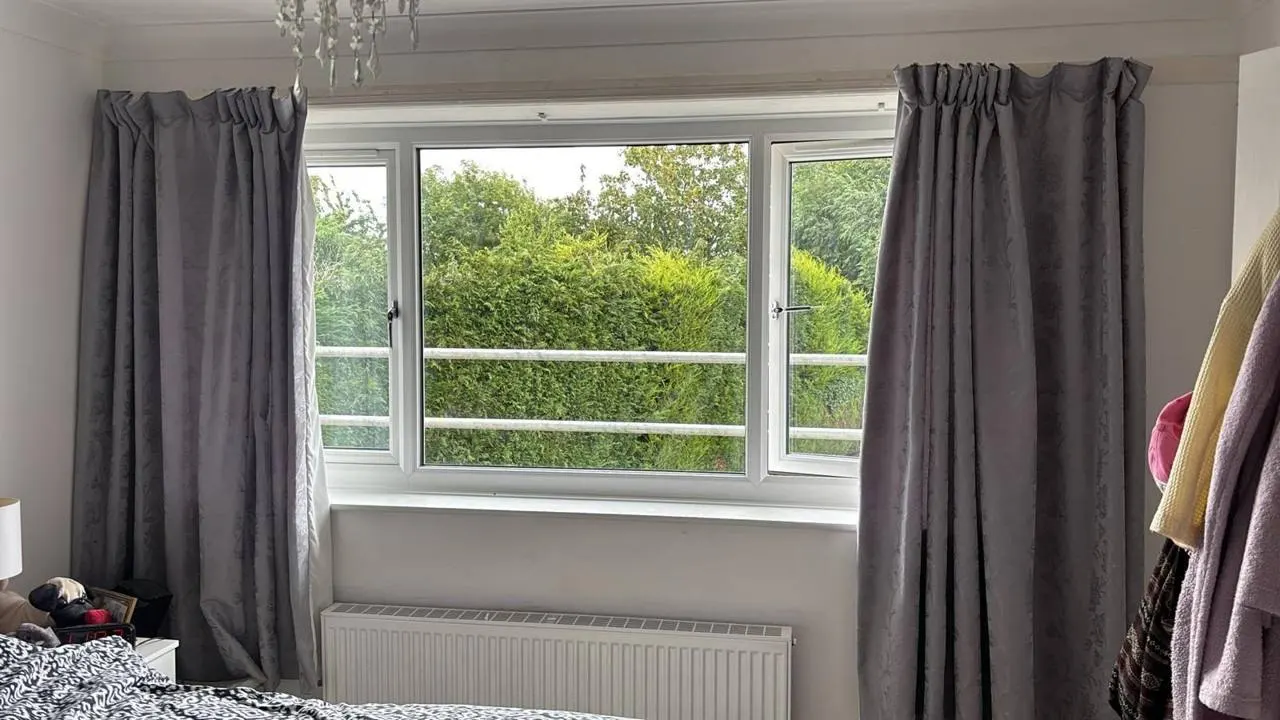
Wet windows on a cold morning are one of the most common things people ask us about from October to March. Most guides online give the same list of tips without explaining why. Here's the short version, and how to tell whether it's your windows or your air.
Why it happens
Warm air holds water. When it touches something cold, it can't hold it any more and the water comes out as droplets. On a cold night your glass is usually the coldest surface in the room, so that's where it shows up first.
Three things decide how wet your windows get: how cold it is outside, how damp the air is inside, and how warm your glass stays.
Is it the windows or the air?
- Single glazing or very old double glazing: the inner pane gets cold, so it steams up on most cold nights. Better glass makes a big difference here.
- Newer A-rated glass still dripping: the air is usually too damp. New windows won't fix that. Ventilation will.
- Mist between the two panes: that's a failed seal on the sealed unit. It isn't the weather and it won't clear on its own.
Not sure? Our free condensation forecast checks the weather for your postcode and shows which nights this week your windows are likely to steam up, and how different glass would compare.
Free fixes that work
- Keep trickle vents open, even in winter.
- Run the bathroom and kitchen extractor fans during and after showers and cooking. Check they actually work.
- Dry washing outside, in a vented dryer, or in a room with the window open and the door shut.
- Keep the heating low and steady rather than off all night and blasting in the morning.
- Leave a small gap between furniture and outside walls.
- Wipe the glass and sills each morning so water doesn't soak into seals and plaster.
Why damp and mould matter
UK government guidance says damp and mould mainly affect the airways and lungs, and that mould is a sign of an underlying problem. Cleaning the mould off isn't enough on its own. The cause (poor ventilation, condensation or a building defect) needs fixing.
Renting from a council or housing association?
Awaab's Law came into force on 27 October 2025. It means social landlords in England must investigate and fix significant damp and mould hazards within set timeframes. Phase 2, from 30 November 2026, extends this to more hazards. It applies to social landlords, not private ones. If you rent from a council or housing association and have damp or mould, report it to them in writing.
When new windows do help
If you've got single glazing or tired old double glazing, modern A-rated glass keeps the inside pane much warmer, so it steams up on far fewer nights. Replacement windows should also keep or add trickle vents, which helps the air side too. We'll tell you honestly on a free survey whether it's the windows, the ventilation, or both.
Sources
Questions
Why do my windows have condensation on the inside every morning?
Warm, damp room air meets cold glass overnight and the water comes out as droplets. Cold nights, damp air and poorly insulated glass all make it worse.
Will new double glazing stop condensation?
It helps a lot if you have single glazing or old double glazing, because modern glass keeps the inner pane warmer. If newer glass is still dripping, the air is usually too damp, and ventilation is the fix.
What does condensation between the panes mean?
Misting between the two panes usually means the seal on the sealed unit has failed. It won't clear on its own and the unit needs replacing.
Does Awaab's Law apply to private renters?
No. Awaab's Law applies to social landlords in England, such as councils and housing associations. It came into force on 27 October 2025.
Ready to talk about your project?
Free survey, honest quote, no obligation. Usually same working day callback.