
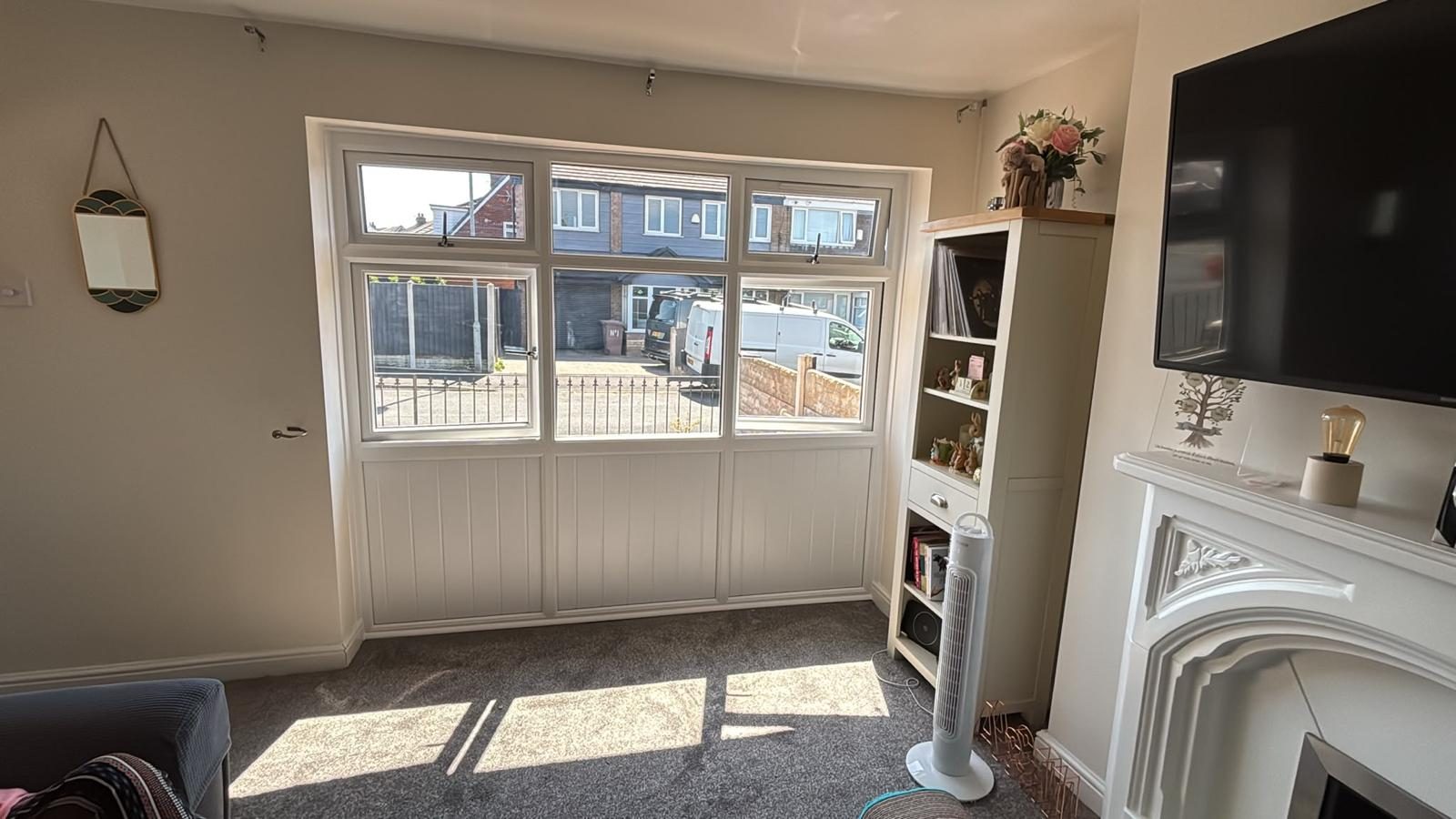
Casement windows are the default in most UK homes — hinged at the side, opening inward or outward with a simple handle mechanism. Tilt-and-turn windows can either tilt inward from the top (for ventilation) or swing fully open from the side (for cleaning and escape).
Tilt-and-turn is more versatile but more expensive — typically 25–40% more per window than an equivalent casement. The tilt position provides secure ventilation without fully opening, which is useful on upper floors or in properties where you want to leave a window open overnight.
The cleaning advantage is real. A tilt-and-turn window lets you clean both sides of the glass from inside the house. For second-floor windows, this eliminates the need for ladders or professional window cleaners just to reach the outside glass.
The downside: tilt-and-turn frames are slightly bulkier than casements because they carry the weight of the sash in both tilt and turn positions. On period properties where slim sightlines are important, a flush casement might be a better visual choice.
In Warrington, we see tilt-and-turn most often on upstairs windows (for safety and cleaning) and casements downstairs (for maximum ventilation in summer). The combination is practical and looks consistent from the outside.
Ready to talk about your project?
Free survey, honest quote, no obligation. Usually same working day callback.